
January
0°C
High up to 2 °C
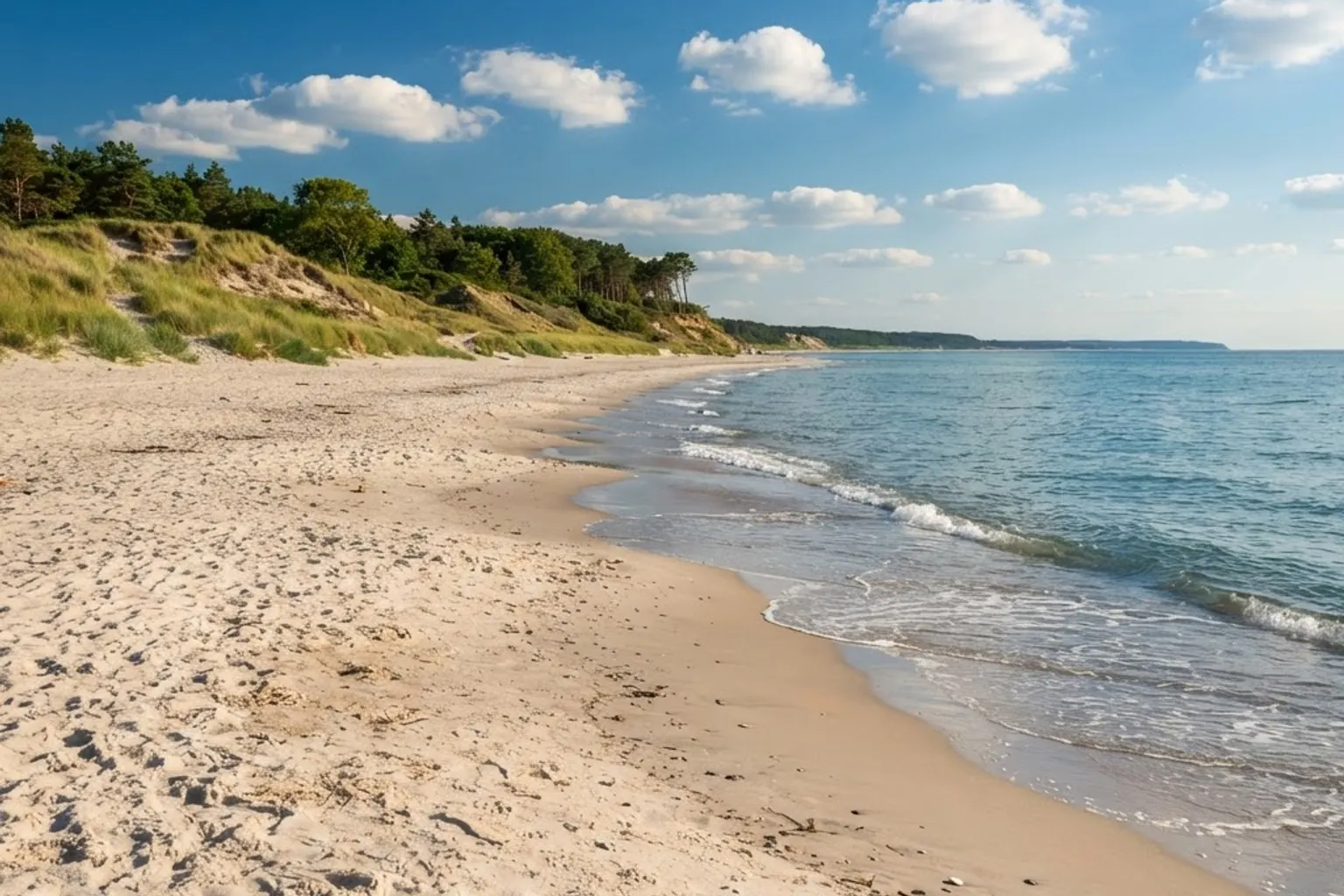
Rügen has a temperate, distinctly maritime climate. The Baltic evens out the temperatures: summers are rarely hot, winters rarely severe. Here you will find the figures, the best time to visit and the weather in the seaside resort of Baabe in detail.
around 9 °C
July & August
around 17 °C
around 1,740 hours
around 530 mm
June to September
Source: Open-Meteo. The first days are reliable; from about a week out the forecast is a tendency – on the coast the wind decides.
The forecast loads as soon as you have allowed external services.
The average air temperature month by month: the length of the bar shows how the months relate to one another, and the line below gives the average daily high.
January
0°C
High up to 2 °C
February
1°C
High up to 3 °C
March
4°C
High up to 6 °C
April
8°C
High up to 11 °C
May
13°C
High up to 16 °C
June
17°C
High up to 20 °C
July
19°C
High up to 22 °C
August
19°C
High up to 22 °C
September
15°C
High up to 18 °C
October
10°C
High up to 13 °C
November
5°C
High up to 8 °C
December
2°C
High up to 4 °C
All monthly values at a glance: air temperature, Baltic water temperature, sunshine hours, precipitation, rainy days and wind. The figures show the typical climate on the south-eastern Baltic – not the forecast for your travel dates.
| Month | Mean air temperature | Mean daily high | Water temperature | Sunshine/day | Precipitation | Rain days | Wind |
|---|---|---|---|---|---|---|---|
| January | 0 °C | 2 °C | 1 °C | 1.6 h | 40 mm | 10 | 5.3 m/s |
| February | 1 °C | 3 °C | 2 °C | 2.4 h | 32 mm | 9 | 5.1 m/s |
| March | 4 °C | 6 °C | 3 °C | 3.8 h | 34 mm | 9 | 4.9 m/s |
| April | 8 °C | 11 °C | 5 °C | 5.6 h | 33 mm | 8 | 4.5 m/s |
| May | 13 °C | 16 °C | 11 °C | 7.8 h | 43 mm | 8 | 4.2 m/s |
| June | 17 °C | 20 °C | 14 °C | 8.4 h | 53 mm | 9 | 4.3 m/s |
| July | 19 °C | 22 °C | 17 °C | 8.2 h | 60 mm | 10 | 4.2 m/s |
| August | 19 °C | 22 °C | 17 °C | 7.2 h | 58 mm | 10 | 4.3 m/s |
| September | 15 °C | 18 °C | 15 °C | 5.5 h | 48 mm | 9 | 4.7 m/s |
| October | 10 °C | 13 °C | 11 °C | 3.6 h | 42 mm | 9 | 5 m/s |
| November | 5 °C | 8 °C | 7 °C | 1.8 h | 45 mm | 11 | 5.3 m/s |
| December | 2 °C | 4 °C | 4 °C | 1.3 h | 45 mm | 11 | 5.4 m/s |
| Year | 9.4 °C | 13.6 °C | 9.9 °C | around 1,740 h | around 530 mm | around 113 | 4.8 m/s |
Long-term, rounded averages for the Baltic region near Baabe. Individual years differ considerably – the table shows the typical climate, not a forecast.
Monthly averages in °C near Baabe
Average sunshine duration in hours
Average monthly total in millimetres
Every season has its own character on the Baltic – from a quiet spring through a mild summer to autumn storms and clear winter days.
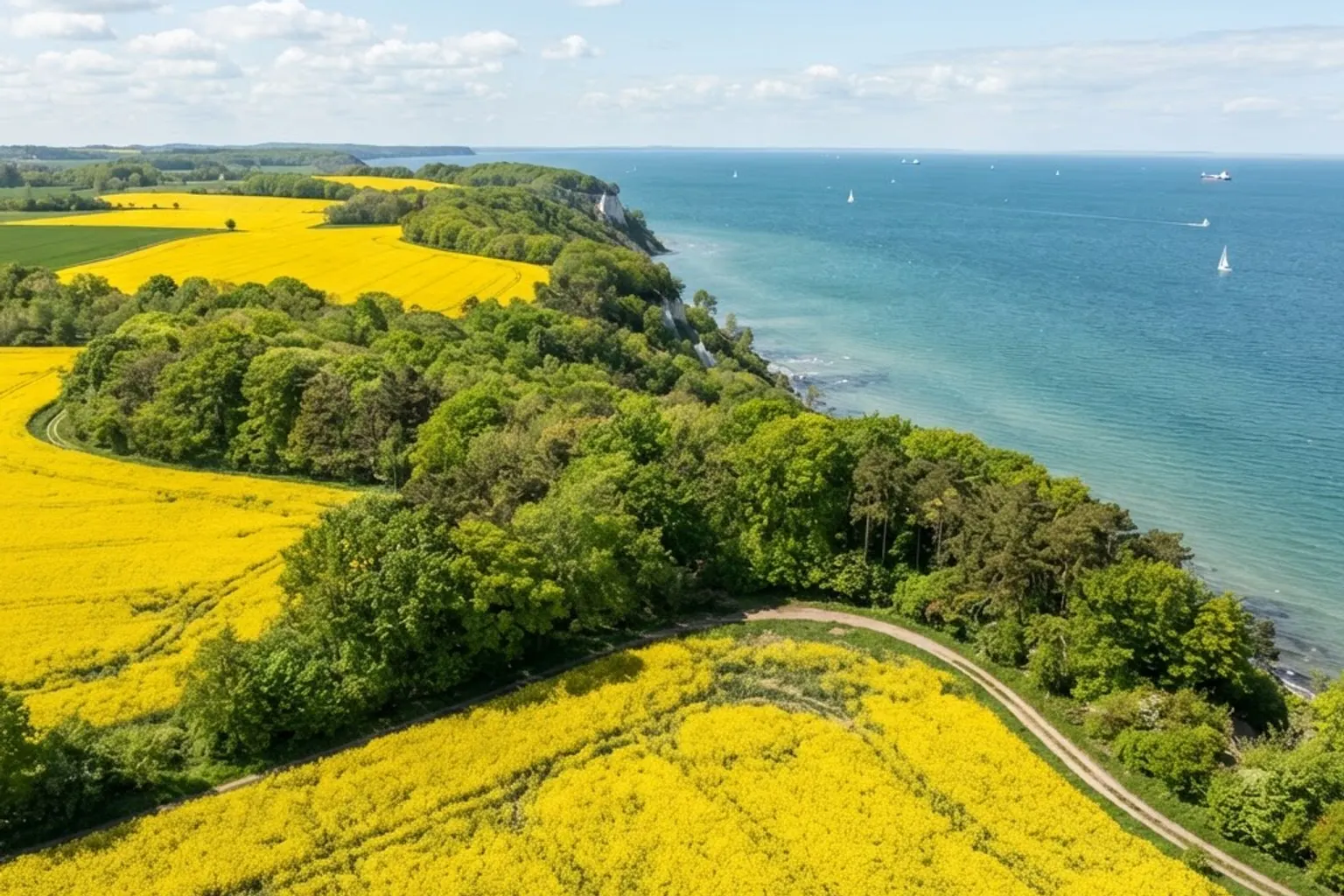
The island wakes up – the quietest time of year for cycling and walking.
Spring temperatures climb slowly: on mild days in March the mercury can already reach 20 °C, while April and May average around 10 to 16 °C during the day.
The coastal forest comes into leaf, the meadows turn green, and cranes rest in the fields on their spring migration. The paths are still empty because the season only gradually gets under way.
Mild rather than hot: the Baltic keeps heatwaves away and the sea breeze cools the air.
In July and August daytime temperatures average 20 to 22 °C, dropping to around 11 to 14 °C at night. Extremes above 30 °C are rare on the coast.
The Baltic reaches its highest water temperature of around 17 °C in July and August, and the bathing season runs roughly from June to September. On hot days the sea breeze brings welcome relief.
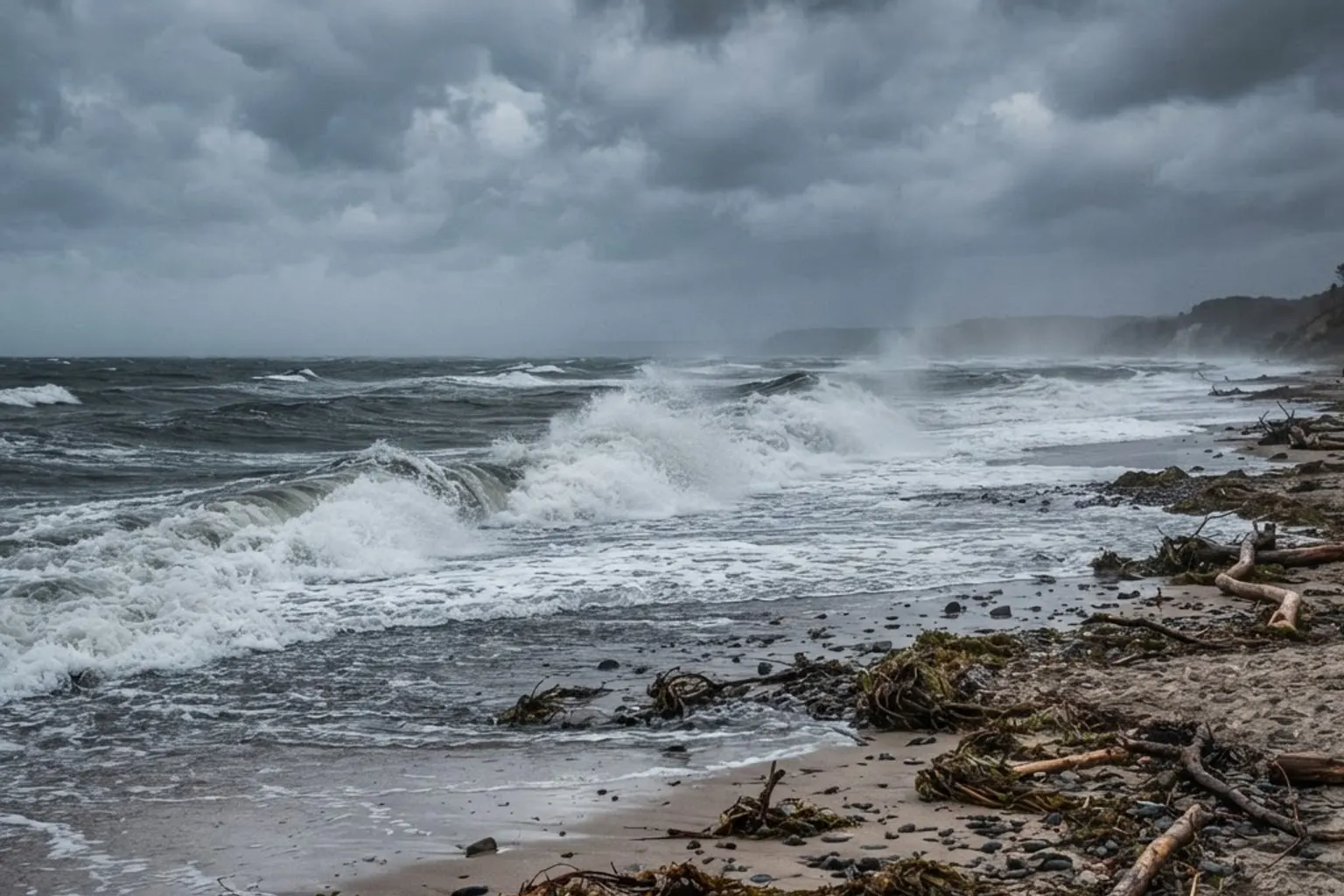
Golden days and the first storms – the most honest season on the Baltic.
In autumn the air cools to around 10 to 15 °C and the days grow shorter. September is often still mild and far quieter than high summer – for many people the nicest time to travel.
At the same time the storm season begins: when the wind blows onshore, the sea rolls over the beach and spray hangs above the waves. It is impressive, but best enjoyed from the safety of the shore.
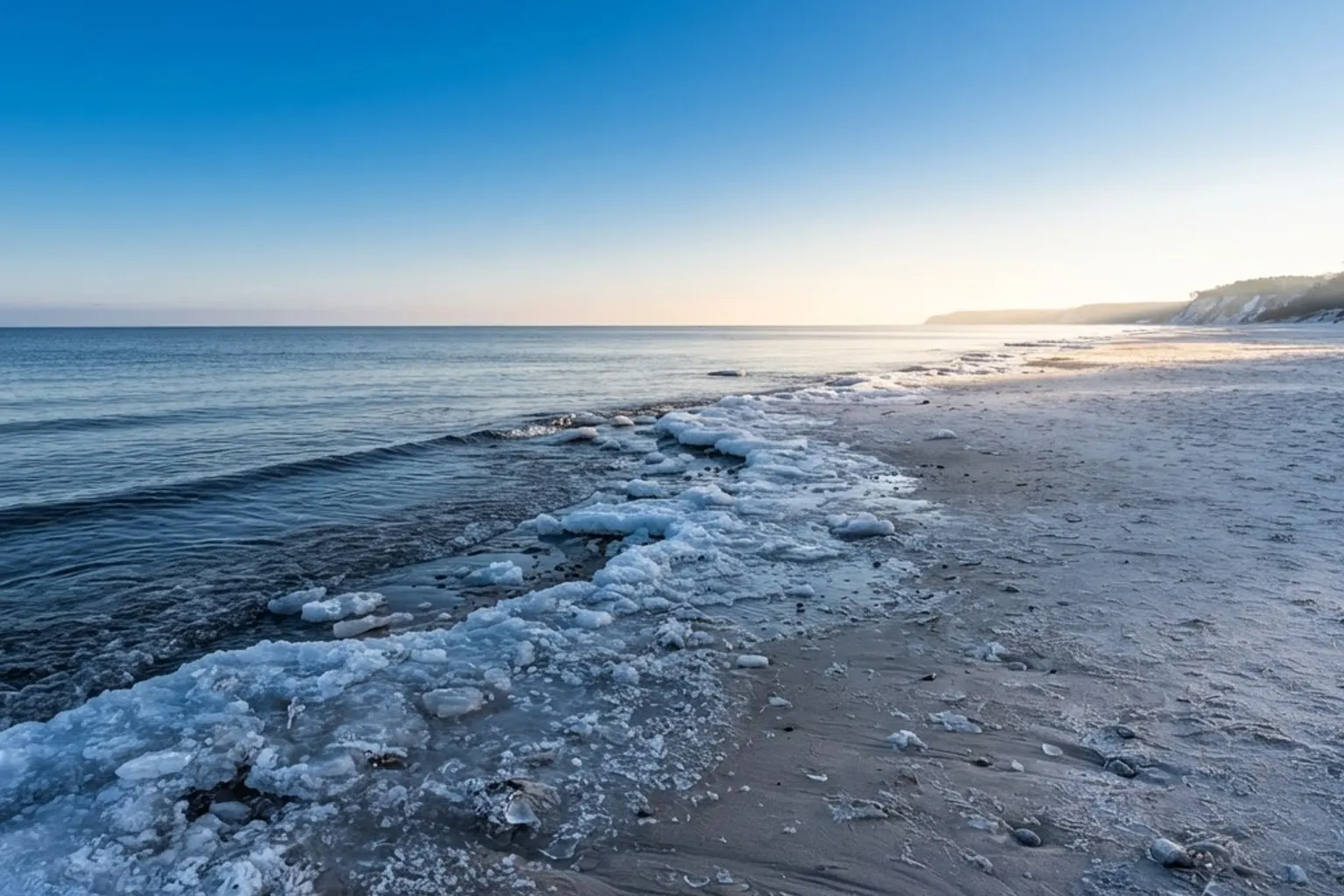
Mild, windy, rarely severe – beach walks in clear air.
Daytime temperatures average 2 to 4 °C and the thermometer often drops below freezing at night. Snow is possible but rarely lies for long on the coast.
In return the beach is deserted and the air is clear. An easterly wind feels noticeably colder than a westerly one – in winter the wind is the single biggest factor in how the weather feels.
There is no single best time to travel: if you want to swim, come in high summer; if you want to cycle and hike, in spring and autumn; and if you are looking for quiet, in the shoulder season.
| Activity | Best time | Why |
|---|---|---|
| Swimming and beach holidays | June to September | Warmest water at around 17 °C in July and August; often still pleasant in September. |
| Cycling | May, June, September | Pleasant temperatures and quiet paths. In high summer the beach gets busy. |
| Hiking | April to June, September to October | Cool air, clear views and quiet trails in the Baaber Heide and the coastal forest. |
| Seeing the heath in bloom | August to September | The heather in the Baaber Heide flowers in late summer and turns the open land violet. |
| Family holidays | June to August | The longest days, the warmest water and the widest choice of activities for children. |
| Quiet and nature | October to March | Empty beaches and low prices – but shorter days and many businesses closed. |
| Photography | All year round | In autumn and winter the low sun gives soft light and long views. |
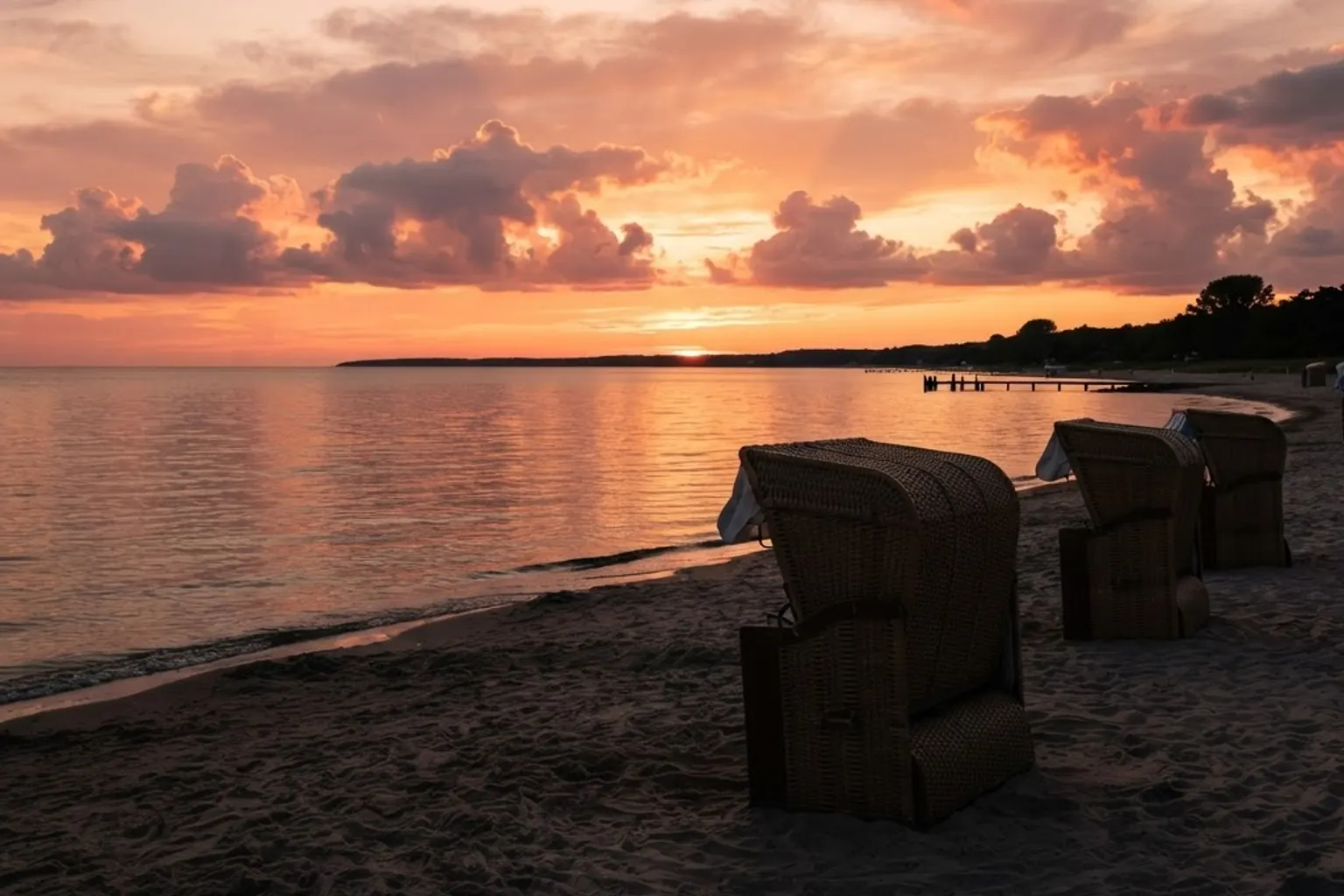
Rügen lies exposed in the Baltic. With no hills and no large towns, the wind can sweep across the island unchecked – which explains the wind and the rapid changes in the weather. At the same time the Baltic acts as a heat store: it cools the summer days and keeps the winter months milder than inland.
The Baltic can turn unpleasant in a storm. When the wind blows onshore, waves and spray roll over the beach – keep your distance from the water's edge and stay away from the cliffs. Lifeguards are on duty only in season and only on supervised sections of beach.
Fog occurs mainly in spring and autumn, when warm air moves over cold water. Thunderstorms are less common on the coast than inland but can build up quickly – on open ground at the beach and on the water you are particularly exposed.
A practical tip for planning your day: check the forecast and wind direction in the morning and arrange the day accordingly. For indoor ideas, the guide has suggestions under Rügen when it rains.
Some weather only exists on the coast: dense fog over cold water, water levels shifted by the wind, or ice on the bodden while the open sea stays free of it.
In spring, warm air drifts over the still cold Baltic water. The result is dense, low fog that often cloaks only the beach and coastline while the land behind is already clear.
A sustained easterly or westerly wind pushes Baltic water towards the coast or draws it away. In an easterly gale the water level at the beach rises by more than a metre; afterwards the shoreline often lies flatter and sandbanks have shifted.
On sunny days the land warms faster than the water. The rising warm air draws cool air from the sea towards the beach – the sea breeze. In the evening the wind turns and blows back out as a land wind.
Shallow, sheltered bodden waters freeze much earlier than the open Baltic. During a sustained cold spell the first ice appears off Baabe and on the Rügischer Bodden, while the open sea usually stays free of ice.
In October and November Atlantic low-pressure systems cross the Baltic particularly often. This is the stormiest time of year – and at the same time the period of the highest water levels.
With no hills and no large towns, the wind can sweep across the island unchecked. Sun, showers and cloud therefore often alternate within a few hours – a day at the beach can have three different faces.
Storm surges, ice winters, heatwave summers: the island's weather history explains why the coast looks the way it does – and what an extreme Baltic storm surge means.
On the night of 12 to 13 November 1872 the worst known storm surge struck the southern Baltic coast from Denmark to Pomerania. The highest measured water level was about 3.3 metres above sea level datum. Dunes and low-lying shore areas were flooded along the Rügen coast and on Mönchgut too – to this day the event is the benchmark for extreme Baltic storm surges.
The winter of 1946/47 brought weeks of frost and froze the Baltic and the bodden. Meteorologically it counts among the coldest winters in the north German record; it is remembered above all for the supply shortages of the post-war years.
For months a persistent frost lay over northern Europe. The Baltic froze over large areas, and on Rügen the bodden was covered for weeks by a load-bearing sheet of ice.
For the most recent time the Baltic froze almost completely – across an area of roughly 415,000 square kilometres, with ice up to 120 centimetres thick. Since then only smaller ice sheets have formed off the coast.
In much of Europe the summer of 2003 was the hottest since records began. Record readings above 38 °C were measured in northern Germany too – on the Baltic the cooling effect of the water kept conditions comparatively bearable.
The winter of 2006/07 was the mildest in Germany since measurements began. Instead of frost and snow, westerly patterns and rain shaped the weather – on the Baltic coast, a winter without a closed ice sheet.
Storm low Xaver swept across northern Germany with severe gusts and pushed Baltic water towards the coasts. Very high water levels were recorded along the Baltic, and on Rügen's beaches sand and marram grass were stripped away over wide areas.
The summer of 2018 was the second warmest in Germany since 1881 and exceptionally dry. On Rügen too water levels fell in ditches and small lakes; forests and heathland suffered from the drought.
A sustained easterly gale pushed Baltic water against the coast: from 19 to 21 October 2023 exceptionally high water levels were recorded along the entire German Baltic coast. The German Weather Service classified the event as an extreme Baltic storm surge.
During particularly strong solar storms, the aurora was visible as far south as northern Germany in May and October 2024 – a rare spectacle above the dark Baltic beach.
For centuries people read the weather in clouds, wind and animals. Some of these rules describe surprisingly accurately what really happens on the Baltic.
Red sky at night, sailor's delight. Red sky in the morning, sailor's warning.
A red evening sky points to clear air in the west, where the weather usually comes from. A red morning sky indicates cloud moving in. The core of this saying has a sound basis.
When the sea smokes, the frost is on its way.
If fog rises from the still warmer water in biting cold, very cold air is flowing in. Sea smoke is a genuine sign of frost on the coast.
West wind brings rain, east wind brings cold.
On the Baltic this often holds true: westerly patterns bring mild, damp Atlantic air, easterly patterns dry, cold continental air.
When the gulls fly inland, storm and rain are near.
A coastal rule from seafaring days: as a storm approaches, gulls seek sheltered areas ashore. Useful as a hint, but no proof.
Wet on Seven Sleepers' Day, rain that will not go away.
The weather around 27 June is taken as a pointer to the rest of the summer. Statistically the link is weak – Seven Sleepers' Day is no reliable forecast.
Safe from night frost you are not, until Sophie's day has passed.
This refers to the Ice Saints from 11 to 15 May. Cold snaps are indeed more frequent in mid-May – a useful date to remember for gardens and pot plants.
Christmas in clover, Easter in snow.
A mild Christmas suggests a late start to winter. There is no evidence for the rule, but it is a familiar reminder of how changeable winters can be.
A cold May fills the barn.
A cool May is considered favourable for the harvest in farming. On the coast it is the rule anyway, because the Baltic keeps the air cool for a long time.
Folk sayings are handed-down experience from farming and seafaring. Some have a plausible background, others have no statistical support – they are entertaining alongside a forecast, but no substitute for one.
The climate on the Baltic is measurably changing. The German Weather Service (DWD) evaluates a data series for Germany that reaches back to 1881.
around 2.5 °C warmer
That is how much the annual mean air temperature in Germany has risen according to the DWD's current assessment.
all after the year 2000
According to the DWD, the nine warmest years in Germany since 1881 all fall after the turn of the millennium.
milder and later
Autumn and winter are warming above average – frost periods with a closed ice sheet on the bodden are becoming rarer.
rising water temperatures
Measurements show warmer Baltic water. As a result the bathing season tends to start earlier and end later.
remain the main risk
The same storms meet higher baseline water levels because of slowly rising sea levels – which makes storm surges more effective.
longer season, more extremes
Milder winters and warmer summer months – but more frequent extremes such as storm surges and very dry summers.
These figures describe long-term trends for Germany and the Baltic region. Individual years can differ markedly.
The most important tip for any time of year: a windproof jacket. On the coast a sunny day with wind feels considerably cooler than inland.
The figures on this page are long-term averages and rounded. They are a guide for planning your trip; actual temperatures, sunshine hours and rainfall vary from year to year. The current weather in Baabe comes from Open-Meteo.
Sources on weather history and climate change
You may also like: Beaches on Rügen, Rügen in spring, Rügen in autumn and Rügen in winter.
You can change or withdraw your consent at any time with effect for the future – via “Settings” in the footer of this website.